
.png&w=1920&q=75)



Cloud Modernization. Expertly Delivered, Strategically Aligned.
CKVal Cloud: Make Cloud Modernization Feel Effortless
Our platform unifies cloud modernization and AI adoption—from assessment to migration, operations, optimization, and governance—while enabling “vibe coding” to rapidly prototype, iterate, and ship solutions with AI assistance. With a single view of applications, data, costs, and controls, leaders can modernize faster, reduce risk, strengthen compliance, and turn cloud and AI investments into measurable ROI.
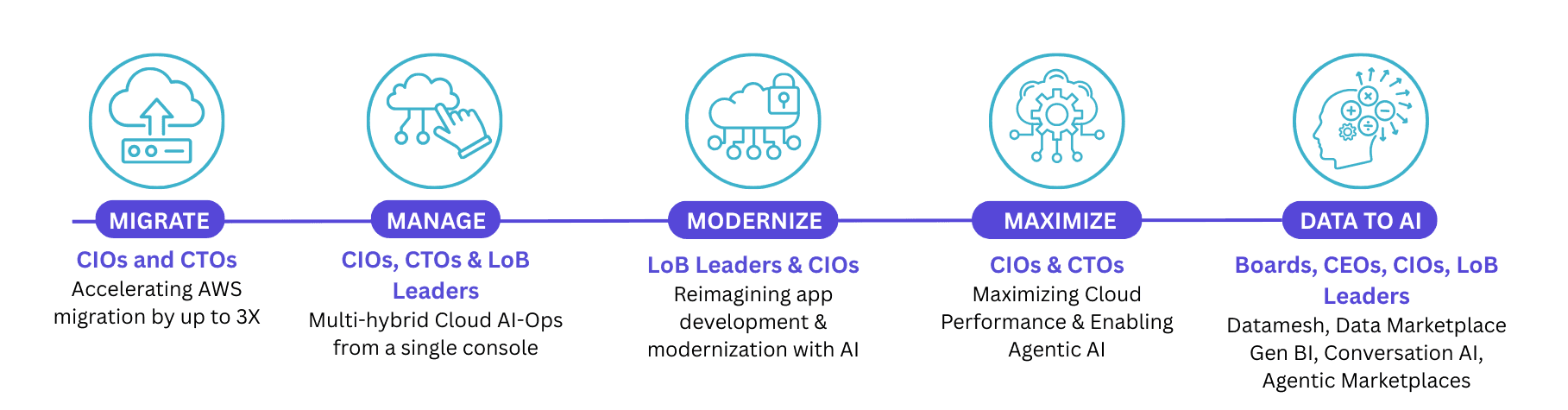
Expert-Led Services that Drive Measurable Growth
Application Development /Modernization

Enterprise Content Management Services

Infrastructure Modernization

Microservices Architecture

Containerization (Docker/Kubernetes)

Serverless Computing

API Development & Integration

Cloud-native development

DevOps Implementation

CI/CD Pipeline Setup

Transforming operations for your business

Transforming operations for your business


Our Approach

Intelligent Assessment & Modernization Strategy
AI-powered evaluation of existing applications, infrastructure, and content systems. Identifies modernization opportunities across legacy workloads, dependencies, and integration points.
Application & Infrastructure Modernization
Refactor or rebuild legacy apps using modern frameworks. Upgrade infrastructure to cloud-native platforms for better scalability, performance, and security.
Microservices Architecture Enablement
Modernized, cloud-optimized applications run faster, scale effortlessly, and support real- time responsiveness across geographies.
Cloud-Native Development with API-First Design
Build applications designed for the cloud from the ground up, using API-driven integration to ensure seamless communication across services.
Enterprise Content Management Modernization
Digitize, centralize, and secure enterprise content with modern platforms to improve collaboration, compliance, and content lifecycle management.
DevOps & CI/CD Pipeline Implementation
Establish DevOps practices and automated CI/CD pipelines to accelerate development cycles, enforce code quality, and support continuous delivery.
Continuous Optimization & Innovation
Post-modernization tuning using AI for performance improvement, cost control, monitoring, and proactive enhancements aligned with evolving business g
Modernization That Delivers Competitive Edge and Real Outcomes

Up to 40% Faster Time-to-Market

35% Reduction in Infrastructure Costs
Infrastructure modernization with autoscaling, containerization, and serverless models optimizes resource usage and lowers operational overhead.

5x Better App Performance
Modernized, cloud-optimized applications run faster, scale effortlessly, and support real-time responsiveness across geographies.

50% Increase in Integration Efficiency
Robust API development and integration unify siloed systems, streamline data exchange, and enable seamless digital experiences.
Frequently asked questions
Cloud modernization goes beyond relocating workloads. It re-architects applications, data, and infrastructure for cloud-native performance using microservices, containers, serverless, and API-first design. Migration moves you to the cloud; modernization aligns architecture, operating model, and KPIs to deliver sustained agility, resilience, and cost efficiency.
ROI is realized through faster release cycles, right-sized infrastructure, reduced technical debt, and automation across CI/CD and operations. Expect lower run-rate costs, improved uptime, stronger security posture, and better customer experiences—plus measurable gains in developer productivity that compound over time across products, channels, and regions.
AI accelerates assessment, code and dependency analysis, and modernization planning; automates testing, regression detection, and safe cutovers; and continuously optimizes capacity, performance, and spend. Post-go-live, AI-powered observability and FinOps guardrails preserve SLA/SLOs while controlling costs—turning modernization into a self-tuning, data-driven system.
Adopt a “portable core, native edge” strategy: Kubernetes, Terraform/IaC, service mesh, and API contracts for portability; curated use of native services (databases, messaging, analytics) where benefits outweigh switching costs. This balances multi-cloud optionality with differentiated capabilities, avoiding brittle least-common-denominator architectures.
Shift to product-centric teams with platform engineering, DevSecOps, and FinOps. Standardize golden paths, automate security and compliance as code, and align budgets to outcomes, not servers. Executive scorecards track release cadence, reliability, cost per transaction, and customer experience so governance reinforces speed, safety, and savings.
Security is built-in: identity-first access, encryption by default, policy-as-code, and continuous posture management. Regulated workloads map to frameworks (e.g., ISO, SOC, HIPAA, PCI) with automated evidence trails. Progressive rollouts, canary releases, and automated rollback minimize business risk while maintaining uptime and data integrity.
Typical programs run 3–9 months per product line, depending on complexity. Prioritize by business criticality, modernization payoff, and risk: quick wins via re-platforming, strategic differentiators via re-architecture, and retire/replace for low-value legacy. A living roadmap sequences value in quarters, not years.
